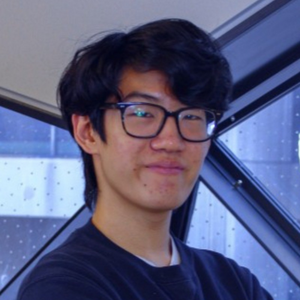
CREATE ADVENTOR Presents: Dr. EunJeong Cheon

Date

Friday February 6, 2026
1:00 pm - 2:00 pm

Location

Hybrid- 69 Union St, Mitchell Hall, Room 395

CREATE ADVENTOR Presents: Dr. EunJeong Cheon Poster


Join us in person, or online for this talk by Dr. EunJeong Cheon from the School of Information Studies at Syracuse University. This talk is open to the public. 

Virtual Meeting


Biography

EunJeong Cheon is an Assistant Professor in the School of Information Studies (iSchool) and a Senior Research Associate at the Autonomous Systems Policy Institute (ASPI) at Syracuse University. Her work in human-computer interaction explores the politics of emerging technology designs, including collaborative robots and labor-tracking AI systems. She focuses on human-robot collaboration in workplaces such as manufacturing and warehouse industries, as well as in creative domains like robotic art. More recently, she investigates autonomous delivery robots navigating urban public spaces. Through the lens of ethnography and design, and guided by questions from the humanities, she examines the politics and power dynamics that shape the relationships among technology, organizations, and humans. Her research has been published in top-tier conferences in HCI (e.g., ACM CHI, CSCW, DIS) and HRI (e.g., ACM HRI). Before joining Syracuse University, she was a tenure-track Assistant Professor in the Department of Computer Science at Aalborg University in Denmark.


Rethinking Design for Human-Robot Collaboration

Robots are increasingly shaping our working lives. Initially confined to manufacturing, collaborative robots (cobots) now operate in warehousing, healthcare, agriculture, and even art production. Human-robot interaction research has made considerable progress in facilitating safer and more efficient collaboration, yet much of it prioritizes seamless integration, task optimization, and safety in shared workspaces. Existing frameworks often focus on factors such as task complexity, physical workspace configurations, and the degree of direct human-robot contact, emphasizing the optimization of human and robotic capabilities. While these approaches have advanced the technical and operational aspects of human-robot collaboration, they often overlook broader social, organizational, and labor-related implications.


In this talk, I argue for a shift in focus: rather than solely designing for technical integration, we must critically examine who benefits from human-robot collaboration and how it reshapes workplace dynamics. Drawing on ethnographic fieldwork in manufacturing environments- including studies with collaborative robot operators and other key stakeholders- as well as recent research on autonomous delivery robots in urban settings, I will present cases that challenge conventional perspectives on human-robot collaboration. Collectively, these field studies highlight the need for more nuanced considerations of social and organizational factors, revealing the diverse and sometimes uneven ways that human-robot collaboration unfolds in practice.


By moving beyond simplified models of collaboration, we can develop more equitable and contextually informed approaches to designing robots for collaborative work. 


Sara Fraser

Head shot of Sara Fraser

Sara Fraser

Research Coordinator ADVENTOR: Advanced Engineering and Training in Next-Generation Mobile Robotics for Human Spaces

Ingenuity Labs Research Institute

Smith Engineering

Jason Millar

Head and shoulders photo of Jason Millar

Jason Millar

Associate Professor, Canada Research Chair in the Ethical Engineering of Robotics and AI

Ethical Engineering of Artificial Intelligence and Robotics

School of Engineering Design and Teaching Innovation

Faculty of Engineering, University of Ottawa

Monica Castelhano

Head and shoulders photo of Monica Castelhano

Monica Castelhano

Professor, Chair of Cognitive Neuroscience Program

Primary research interests are in the visual attention and visual memory and how they function in our everyday lives

Department of Psychology

Faculty of Arts and Science

Ingenuity Labs Presents: Dr. Nasim Montazeri Ghahjaverestan

Date

Thursday August 14, 2025
10:30 am - 11:30 am

Location

Mitchell Hall, Room 395

Join us for this talk by Dr. Nasim Montazeri Ghahjaverestan

Sleep and Brain Health

Disrupted sleep is increasingly recognized not only as a consequence but as an early sign of underlying health issues. It has been linked to the onset and progression of neurological and chronic conditions, including dementia and epilepsy. In this way, sleep
serves as a vital indicator of brain health. To assess sleep, an intensive process is conducted inside specialized laboratories, involving the attachment of dozens of sensors to record physiological signals overnight. While effective, this method is costly,
limited to a single night's data, and often has long waitlists. Such inconvenient setup canbe intolerable for many populations, especially older adults or those with chronic illnesses. To improve sleep monitoring, wearables have become more widely adopted.
These systems offer convenience and long-term tracking, but often lack the accuracy and resolution needed for clinical decision-making.

This talk explores how artificial intelligence (AI)—particularly signal processing, machine learning, and sensor fusion techniques—can enhance the diagnostic power of wearable sleep data. By leveraging algorithms to extract meaningful patterns from noisy, low-resolution signals, AI can transform consumer-grade wearables into tools capable of supporting medical-grade insights. This intersection is high interdisciplinary and presents a rich area of innovation: from hardware design and embedded sensing to data
analysis, model interpretability, and clinical validation. The talk will highlight both the technical challenges and the opportunities to create AI-powered systems that can quantify sleep and help elucidate the complex links between sleep disruption and brain health.

Dr. Nasim Montazeri is an Assistant Professor in the Department of Electrical and Computer Engineering. Before joining Queen's, she was a postdoctoral fellow at the Sunnybrook Research Institute and University Health Network. She received a double PhD degree in signal processing and biomedical engineering from the University of Rennes 1 in France and Sharif University of Technology in Iran. Dr. Montazeri holds BSc degrees in biomedical and control engineering and a MSc degree in biomedical engineering. Dr. Montazeri was a woman entrepreneur and the co-founder of the BioSenseTex, a start-up company with expertise in developing innovative medical textile-based wearables. Dr. Montazeri was the recipient of several entrepreneurship awards, such as "Borealis AI/RBC" for her innovative research on analyzing respiratory system using acoustics and the Entrepreneurship for Cardiovascular Health Opportunities, ECHO" award for developing a textile-based sensor to measure lung edema in heart failure. To date her research has led to more than 40 journal article publications, conference presentations, abstracts and invited talks in major scientific venues such as American Thoracic Society (ATS), European Respiratory Society (ERS), World Sleep Congress, IEEE-EMBS, IEEE-ISSPIT, and Canadian Consortium on Neurodegeneration in Aging (CCNA). Her research interests include the development of medical wearables that promote remote health monitoring, the analysis of health data, and the use of artificial intelligence in healthcare—more specifically in sleep.  
 

Ingenuity Labs Presents: Dr. Jessica Burgner-Kahrs

Date

Thursday July 24, 2025
10:00 am - 11:30 am

Location

Mitchell Hall, Room 395

Join us for this talk by Dr. Jessica Burgner-Kahrs from the University of Toronto.

Physical and Computational Intelligence in Continuum Robotics

Continuum robots, with their slender, compliant bodies and intrinsic dexterity, offer unique capabilities for navigating and operating in constrained, cluttered, and deformable environments. Their ability to bend, twist, elongate, and conform enables curvilinear motion and environmental interaction in ways that rigid-link robots cannot replicate. These characteristics make them ideal for tasks ranging from minimally invasive surgery to inspection and repair of complex industrial systems, including turbomachinery found in power generation and propulsion, such as water turbines in hydroelectric plants. Yet, these capabilities come with substantial challenges: the need for novel actuation schemes, efficient and accurate models of their nonlinear behaviour, and robust state estimation under severe sensing limitations. In this talk, I will present our recent advances in the design and control of tendon-driven and soft continuum robots. I will discuss how physical intelligence—the purposeful embodiment of functionality in morphology and material—enables new robot designs that offload computational complexity to the body. In parallel, I will present how computational intelligence, through model-based estimation and control, complements embodiment by extracting and leveraging structure from sparse data and uncertain environments. Together, these approaches enable robust operation and decision-making in real-world settings, advancing continuum robotics toward broader deployment.

Jessica Burgner-Kahrs is Professor with the Departments of Mathematical & Computational Sciences, Computer Science, and Mechanical & Industrial Engineering, the founding Director of the Continuum Robotics Laboratory, and Associate Director of the Robotics Institute at the University of Toronto, Canada. She received her Diplom and Ph.D. in computer science from Karlsruhe Institute of Technology (KIT), Germany in 2006 and 2010 respectively. Before joining the University of Toronto, she was Associate Professor with Leibniz University Hannover, Germany and a postdoctoral fellow with Vanderbilt University, USA. Her research was recognized with the Heinz Maier-Leibnitz Prize, the Engineering Science Prize, the Lower Saxony Science Award in the category Young Researcher, and she was entitled Young Researcher of the Year 2015 in Germany. She was elected as one of the Top 40 under 40 in the category Science and Society in 2015, 2016, and 2017 by the business magazine Capital and elected one of 100 Young Global Leaders from the World Economic Forum in 2019. Jessica is a Senior member of the IEEE, a Distinguished Lecturer of IEEE RAS, and serves as a senior editor for IEEE RA-L.


Ingenuity Labs & CREATE ADVENTOR Present: Dr. Heather Knight

Date

Wednesday June 11, 2025
9:30 am - 10:30 am

Location

69 Union St, Mitchell Hall, Room 395

This is an AI generated colourful illustration of a performance with robots and humans on stage

Join us for this talk by Dr. Heather Knight. She will explain her research work with CHARISMA. This talk is open to the public.

Entertainment Methods in Social Robotics

Comedy, theatre, and the arts, broadly, – are disciplines with practices that may benefit the development of everyday robots. These fields have expertise in repeatably conveying character, motivations, and relationships to a human audience. The entertainment industry also offers venues for deploying robots, collecting data from large numbers of people at a time, which is especially pragmatic in times when research funding may be challenging. My work – now situated in the CHARISMA Lab – has used these methods in experimental protocols with robots and human subjects for over a decade. (The street can also be a stage, anything to get robots out of “the lab.”)

CHARISMA stands for Collaborative Humans and Robotics: Interaction, Sociability, Machine learning and Art. We develop robot behavioral software and interfaces that take humans into account as informed by the arts. Our past work considers expressive robots in many domains: from personal exploration (human-robot meditation retreats), to reimagining social settings (multi-robot furniture systems), to infusing robots in established cultural traditions (trick-or-treating robots), to artistic design (robot rehearsal software), to otherworldly entertainment (light equipped quadruped dance performances), to the dull, dirty, and dangerous work (intuitive controllers for robots to remove barnacles and maintain surfaces underwater). We have invented human-robot improv games, deployed multi-robot systems to run their own user studies, leveraged in-the-wild deployments to assess realworld robot systems, and produced a Robot Film Festival.

CHARISMA is powered by an interdisciplinary team of robot innovators, From undergrads to Ph.D. students to Artists-In-Residence. Our main research contributions are in Human-Robot Interaction and Social Robotics, two fields which seek to optimize the human-robot interface, integrating the fields of engineering, programming, electrical engineering, and psychology. This work has been recognized within academia (our work has over 1500 citations) and outside it (my work developing an expressive machine on a music video was recognized with a British VMA). We also develop robot rehearsal software and creatively intersect dance and acting with embodied intelligence.