Ryan Grant

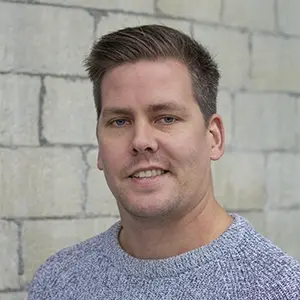
Head and shoulders photo of Ryan Grant.

Ryan Grant

Assistant Professor

Cloud Computing, High Performance Networks, Low-level Hardware-software Interfaces, Message Passing, High Performance Computing (HPC), Power/Energy Management of Extreme-scale Systems

Electrical and Computer Engineering

Smith Engineering

The Role of the Trunk in the Stability and Energetics of Locomotion

Date

Thursday April 18, 2024
1:30 pm - 3:00 pm

Location

69 Union St, Mitchell Hall, Room 395

Aaron Best

The Role of the Trunk in the Stability and Energetics of Locomotion

Human bipedal walking can be both stable and energetically efficient in complex environments. Previous research has primarily focused on the role of the lower limbs, and little is known about how the trunk contributes towards gait stability and energetic efficiency. I will discuss how I addressed this gap through four novel studies that investigated the role of trunk in human gait. These studies encompass walking at very slow speeds, walking outdoors in winter and summer weather conditions, restricting stability strategies, and the energetic consequences of trunk lean. Each of these studies improve scientific understanding of how the trunk is controlled in order to maintain stability and energetic efficiency during walking, leading to more informed robot algorithms or training regimes for gait assistance and recovery.

Aaron Best is a PhD student at Ingenuity Labs working in the Biomechanics x Robotics Laboratory under Dr. Amy Wu. His research is on the fundamental strategy that humans use to avoid falling while walking. Aaron did his BASc in applied science at Queen's University and has recently defended his PhD thesis.

Ted Chiang, Artificial Intelligence, Artifice and Art

Date

Wednesday March 20, 2024
2:30 pm - 4:00 pm

Location

69 Union St, Mitchell Hall, Room 395

Ted Chiang: Artificial Intelligence, Artifice, and Art


Ted Chiang: Artificial Intelligence, Artifice and Art

Does artificial intelligence deserve to be called intelligence? What are the uses of synthetic text and imagery, and what would it take for those to be artistic mediums?

Ted Chiang has been described as the greatest living science fiction writer. His stories have won 4 Hugo awards, 4 Nebula awards, and 6 Locus awards. The Denis Villeneuve film Arrival is an adaptation of Chiang’s "Story of Your Life". Chiang is also a frequent contributor to the New Yorker Magazine, and was named one of Time's 100 most influential people in AI.

Please register here for tickets: https://www.eventbrite.ca/e/ted-chiang-ai-artifice-and-art-tickets-859150421037

Thanks to the School of Computing, Philosophy Department, Ingenuity Labs, Cultural Studies Program, and English Department for sponsoring this event.


Whit Schonbein and Scott Levy from Sandia National Laboratories

Date

Tuesday April 9, 2024
1:30 pm - 2:30 pm

Location

69 Union St, Mitchell Hall, Room 395

Supercomputing at Sandia Overview

The talk will open with an overview of Sandia National Laboratories by Whit Schonbein. Sandia is one of the largest research laboratories in the world, and their use of Supercomputing over many years. This is meant to be very accessible and demonstrate to the audience the many uses of supercomputing and its emerging use in AI.

Leveraging high-performance data transfer to offload data management and analysis tasks to DPUs

Network interface controllers (NICs) with general-purpose compute capabilities (SmartNICs) present an opportunity for reducing host application overheads by offloading tasks that are not central to the execution of the target application to a SmartNIC.  In this talk, we will discuss the role of SmartNICs in high performance computing (HPC) and then describe our approach for leveraging SmartNICs to offload data management and analysis tasks.

Data management and analysis plays a critical role in our application workflows. Our applications generate enormous amounts of complex data that require analysts to apply powerful tools for analysis and visualization.  Offloading tasks associated with these tools to a SmartNIC has the potential to free up host resources that can be exploited to advance the target application.  Effectively offloading tasks from host to SmartNIC also requires the host data associated with the offloaded computation to be transferred to the SmartNIC.  To address this need, we introduce a high-performance, general-purpose data movement service that facilitates the offloading of tasks to SmartNICs: the SmartNIC Data Movement Service (SDMS).  SDMS provides near-line-rate transfer bandwidths between the host and NIC with minimal host involvement. Moreover, SDMS’s In-transit Data Placement (IDP) feature can reduce (or even eliminate) the cost of serializing data on the NIC by performing the necessary data formatting during the transfer.  We also present an in-depth case study based on Apache Arrow to demonstrate how SDMS can used effectively to offload data transformation operations.
 

RAIS2024

Date

Wednesday August 7, 2024
9:00 am - 5:00 pm

Location

69 Union St, Mitchell Hall, Room 395

Our annual Robotics and AI Symposium will be held again on August 7, 2024, in conjunction with the IEEE CCECE 2024 conference. Please check back again for more details as we get closer to the date.

Gunnar Blohm

Head and shoulders photo of Dr. Gunnar Blohm

Gunnar Blohm

Professor, Connected Minds’ Vice-Director

Computational modeling and experimentation in sensorimotor control

Centre for Neuroscience Studies

Biomedical and Molecular Sciences

Xian Wang

Head and shoulders photo of  Dr. Xian Wang

Xian Wang

Assistant Professor

Medical Robotics for Tumor Treatment, Micro and Nano Robots driven by External Field, Instrumentation for Micromanipulation, Cell Mechanics Modeling and Measurement

Mechanical and Materials Engineering

Smith Engineering